Diseases generate a variety of costs
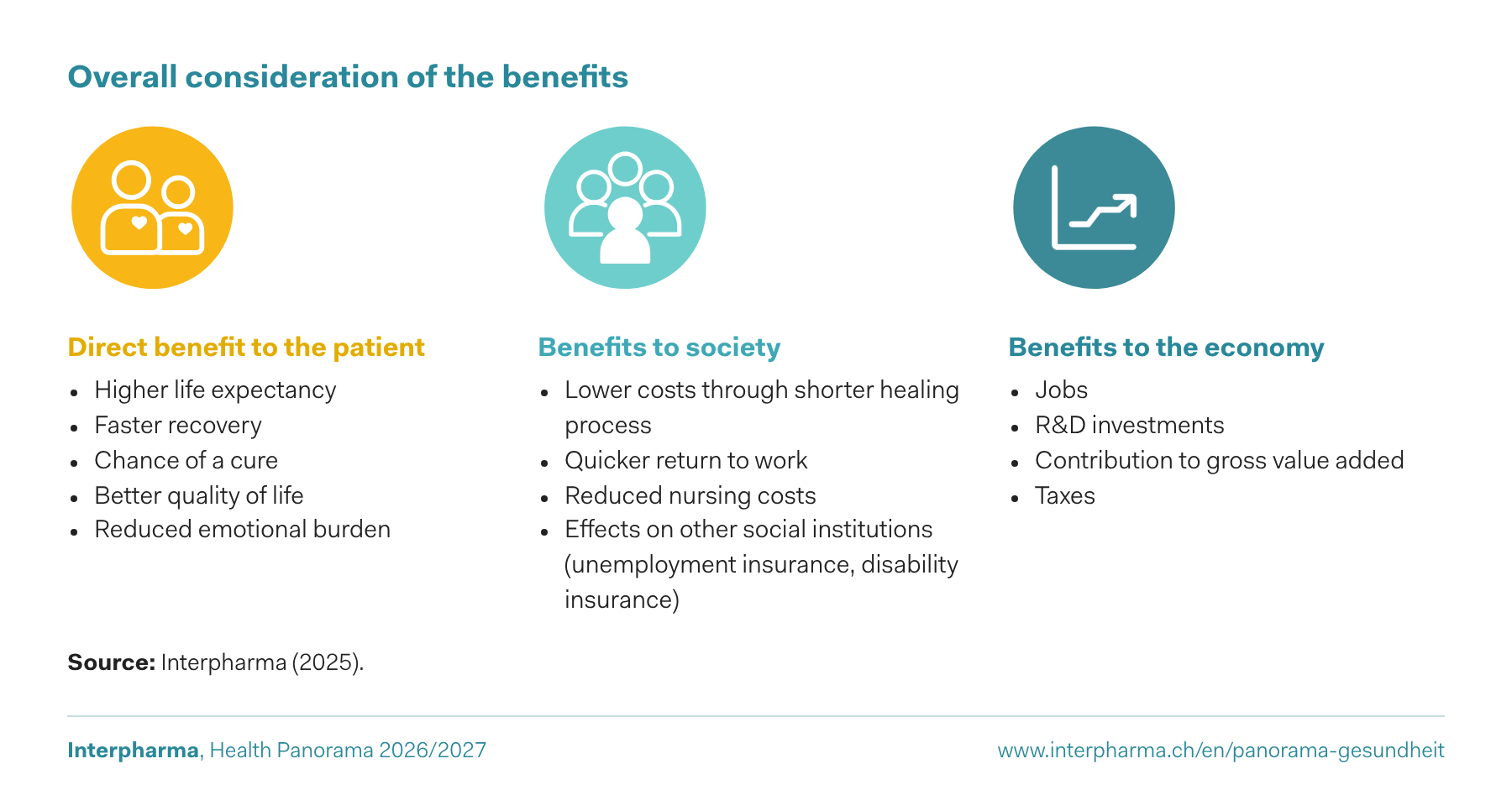
Diseases are primarily a burden on the sick and their relatives. But others are often affected too – health insurers cover the costs of medical treatment, employers suffer from lost working hours and the patient’s social circle also has to deal with the consequences of disease (e.g. care costs).
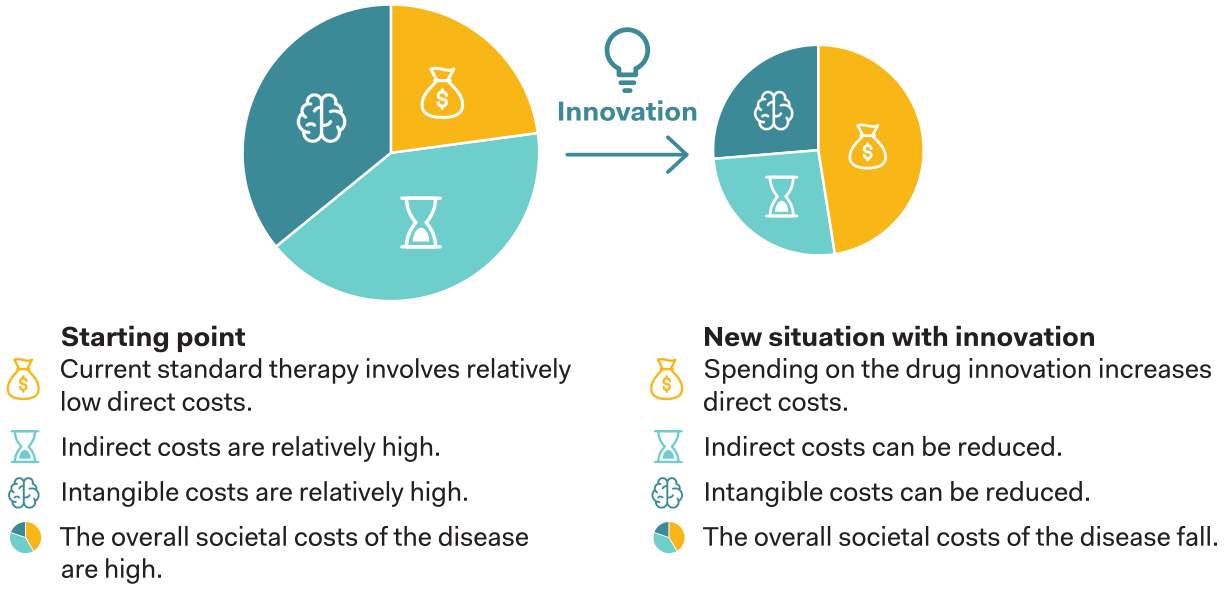
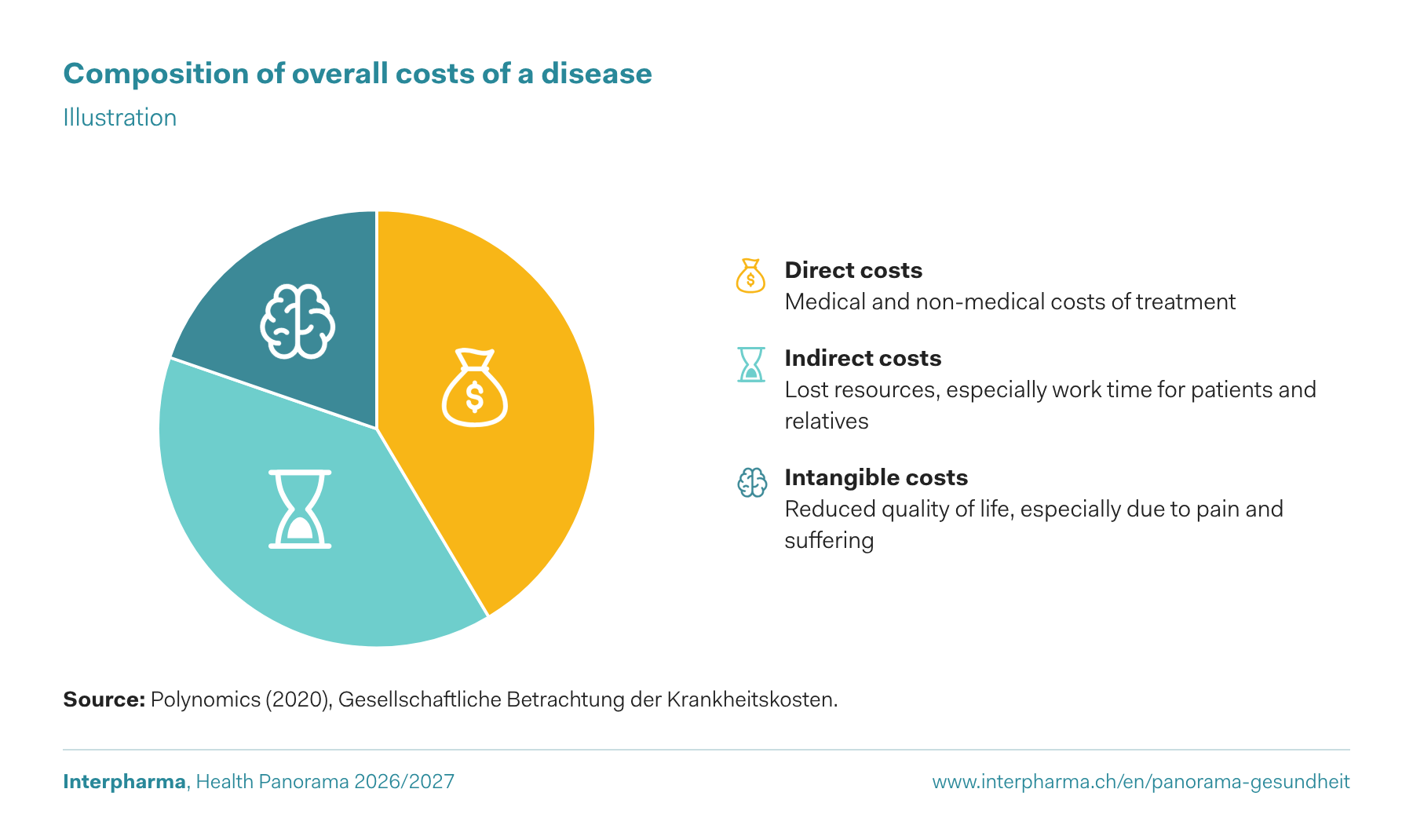
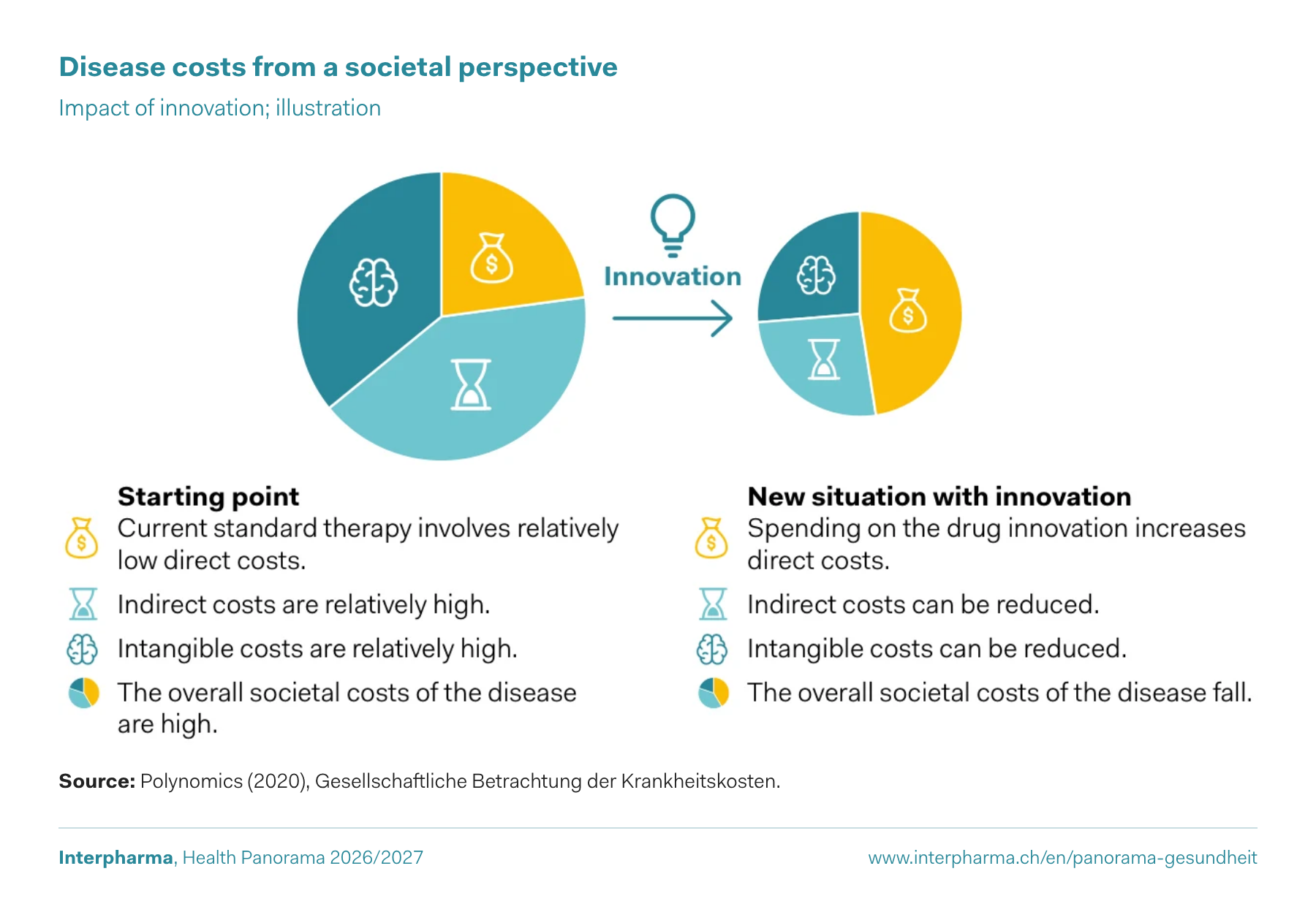
A distinction can be made between direct costs (medical and non-medical treatment costs), indirect costs (lost resources) and intangible costs (reduced quality of life). The sum of these costs corresponds to the cost of a disease to society.
Composition of overall costs of a disease
Illustration
- Direct costs
Medical and non-medical costs of treatment - Indirect costs
Lost resources, especially work time for patients and relatives - Intangible costs
Reduced quality of life, especially due to pain and suffering